
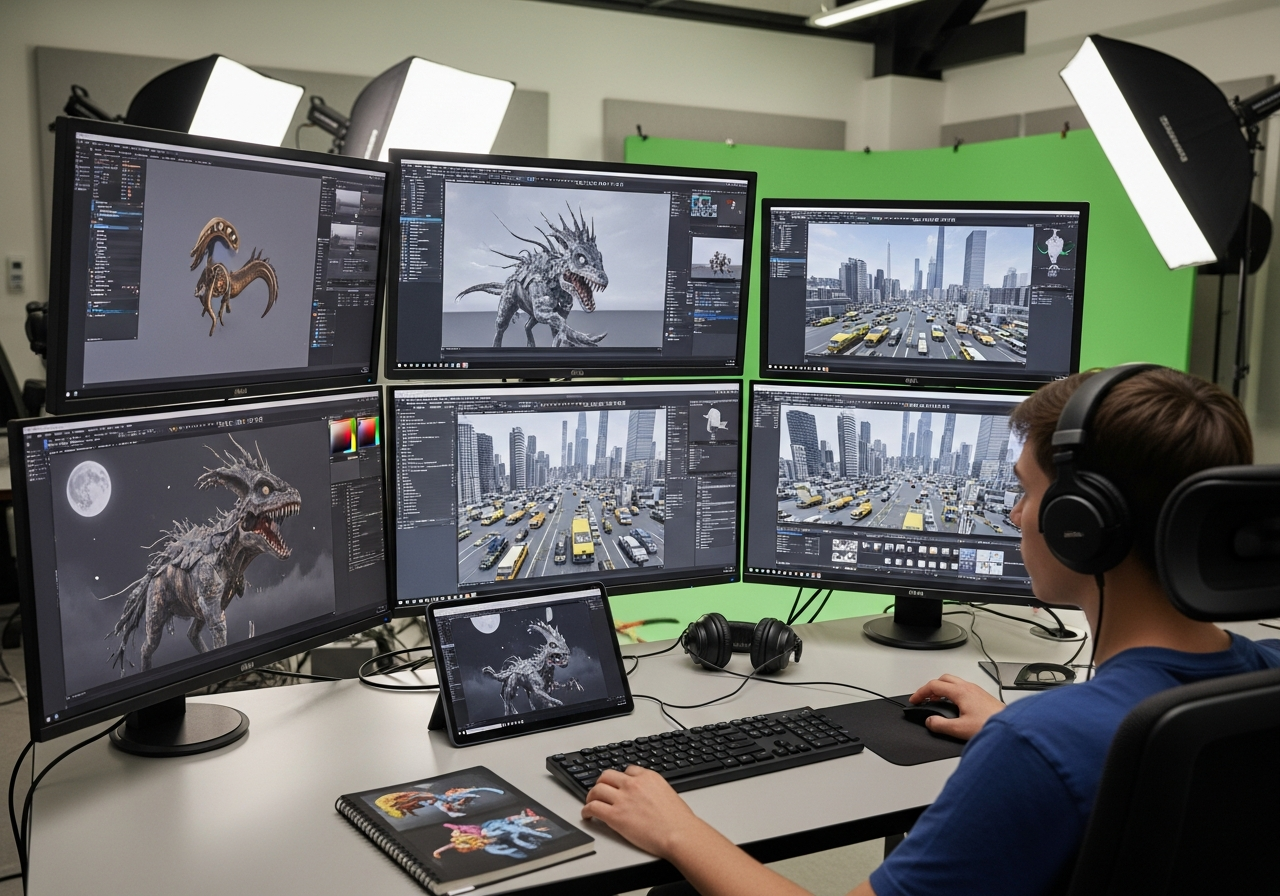
Vancouver stands as one of the world’s premier visual effects hubs, home to industry giants like Image Engine, Sony Pictures Imageworks, and dozens of cutting-edge studios that create the magic behind blockbuster films and streaming content. For students pursuing careers in VFX, animation, and game art, securing a co-op placement in Vancouver’s thriving ecosystem represents the most direct pathway into this competitive industry. Unlike traditional job applications, co-op programs offer structured entry points that connect academic learning with real-world studio experience.
This comprehensive guide targets students enrolled in VFX and game art programs who need a clear, actionable roadmap to navigate Vancouver’s unique co-op landscape. You’ll discover how to leverage institutional resources, align your portfolio with industry expectations, and transform temporary placements into lasting career opportunities through strategic preparation and professional execution.
Understand How Vancouver’s VFX Co-op Ecosystem Works
Vancouver’s position as a global VFX hub stems from British Columbia’s competitive tax credit system, which attracts major productions and supports a robust network of studios ranging from boutique shops to international powerhouses. This ecosystem creates unique co-op opportunities that blend academic requirements with industry needs, offering students multiple pathways to gain professional experience.
The co-op structure in Vancouver differs significantly from other markets due to the close integration between educational institutions and studios. Local schools like Vancouver Film School, LaSalle College Vancouver, and BCIT maintain active partnerships with industry leaders, creating a pipeline that benefits both students seeking experience and studios needing talented support staff. Understanding these relationships helps students position themselves strategically within the system.
| Element | What it is | Why it matters for VFX co-op | Vancouver-specific notes |
|---|---|---|---|
| BC Tax Credits | Provincial incentives for VFX production | Creates demand for local talent and training programs | Students must be BC residents to qualify studios for credits |
| Studio Partnerships | Formal agreements between schools and VFX companies | Direct access to co-op postings and mentorship | Strong networks between faculty and studio supervisors |
| Co-op Coordinators | Dedicated staff managing student placements | Bridge communication between students and studios | Often have direct relationships with VFX recruiters |
| Industry Events | Regular networking meetups and showcases | Opportunities to meet hiring managers informally | SIGGRAPH Vancouver chapter and VES events |
| Project Cycles | Seasonal production schedules in studios | Determines when co-op positions become available | Film projects often align with academic terms |
Vancouver studios operate within project-based cycles that influence co-op availability and timing. Understanding these patterns helps students align their academic schedules with industry needs, maximizing their chances of securing meaningful placements during peak production periods.
Types of VFX Co-op and Internship Opportunities in Vancouver
Vancouver’s VFX co-op landscape encompasses three primary categories: formal school-coordinated placements, studio-initiated internship programs, and temporary project-based positions. School-coordinated co-ops typically run 4-8 months and include academic credit, structured learning objectives, and regular check-ins with faculty advisors.
Studio-driven internships often target specific skill sets or departments, such as compositing or lighting, and may lead directly to junior positions upon successful completion. These programs usually feature mentorship components and exposure to multiple project phases, providing broader industry perspective than traditional entry-level roles.
Temporary or contract positions offer flexible scheduling that can accommodate academic requirements while providing real production experience. Though less structured than formal co-ops, these roles often serve as stepping stones to longer-term opportunities and help students build professional networks within the Vancouver VFX community.
Key Stakeholders: Schools, Studios, and Co-op Offices
The success of Vancouver’s VFX co-op ecosystem depends on active collaboration between educational institutions, industry partners, and dedicated administrative staff. Co-op offices serve as intermediaries, managing student eligibility, coordinating placements, and maintaining relationships with studio hiring managers who regularly seek emerging talent.
Studios benefit from this structure by accessing pre-screened candidates who understand professional expectations and possess relevant technical skills. Many Vancouver VFX companies maintain ongoing relationships with specific programs, creating predictable talent pipelines that support their staffing needs during busy production periods.
Faculty members with industry experience often serve as crucial connectors, leveraging their professional networks to create opportunities for standout students. This three-way partnership ensures that co-op placements provide meaningful learning experiences while addressing real business needs within the competitive VFX marketplace.
Check Your Eligibility and Choose the Right Education Path
Before pursuing VFX co-op opportunities in Vancouver, students must verify their eligibility for both academic programs and work authorization in British Columbia. Most co-op programs require students to complete specific prerequisite courses, maintain minimum GPA standards, and demonstrate technical proficiency through portfolio reviews or skills assessments.
The timing of your co-op search depends heavily on your chosen educational pathway, as different programs offer varying levels of industry integration and placement support. Understanding these requirements early allows you to plan your academic schedule strategically and address any potential barriers before application deadlines.
- Research VFX programs at Vancouver-area institutions and compare their co-op requirements, industry partnerships, and graduate placement rates to identify the best fit for your career goals.
- Verify your immigration status and work permit requirements if you’re an international student, ensuring you can legally participate in co-op programs before enrollment.
- Calculate the minimum GPA and course completion requirements for your target program’s co-op eligibility, typically requiring 60-70% of coursework with a 3.0+ GPA.
- Prepare a preliminary portfolio showcasing your current skill level to demonstrate readiness for industry exposure during co-op application processes.
- Connect with your school’s co-op coordinator during your first academic term to understand application timelines and begin building the advisor relationship.
- Register for co-op preparatory workshops or courses that many institutions require before students can access placement opportunities.
Different Vancouver institutions approach VFX co-op integration uniquely, with some programs building mandatory placements into degree requirements while others offer optional tracks for motivated students. Research these structural differences to choose a program that aligns with your career timeline and learning preferences.
Program and Co-op Requirements You Must Meet
Most Vancouver VFX programs establish clear benchmarks students must achieve before accessing co-op opportunities. These typically include completing foundational courses in software applications, demonstrating proficiency in core technical skills, and maintaining academic standing that reflects professional readiness.
Co-op coordinators often require students to complete preparatory workshops covering resume writing, interview skills, and workplace expectations before approving them for placement consideration. Some programs also mandate completion of specific software certifications or portfolio milestones that align with industry standards.
International students face additional requirements including valid study permits with co-op work authorization, which must be arranged before program enrollment. Understanding these legal prerequisites prevents delays that could impact your ability to participate in time-sensitive placement opportunities.
Clarify Your Target Roles and Specializations in VFX
Successful VFX co-op placement requires focusing your efforts on specific roles rather than applying broadly to “any available position.” Vancouver studios operate with specialized departments, each requiring distinct skill sets and offering different career progression paths. Understanding these distinctions helps you tailor your portfolio and applications effectively.
Entry-level co-op positions typically fall within technical artist tracks, production support roles, or junior artist positions in specific departments like compositing, lighting, or effects simulation. Researching the day-to-day responsibilities and growth opportunities within each track ensures your co-op experience aligns with long-term career objectives.
| Role / Track | Core Skills | Typical Co-op Tasks | Best-Fit Student Background |
|---|---|---|---|
| Junior Compositor | Nuke, After Effects, color theory | Basic compositing, rotoscoping, paint fixes | Strong attention to detail, photography knowledge |
| Lighting Assistant | Maya, Arnold/VRay, lighting principles | Scene setup, render optimization, lookdev support | 3D generalist with artistic eye |
| FX Junior Artist | Houdini, Maya, simulation basics | Asset preparation, simulation cleanup, cache management | Technical mindset, problem-solving skills |
| Pipeline TD Assistant | Python, MEL, pipeline tools | Tool testing, documentation, workflow optimization | Programming background, systems thinking |
| Animation Support | Maya, MotionBuilder, animation principles | Crowd animation, secondary animation, cleanup | Character animation focus, timing sense |
| Production Coordinator | Project management, Shotgun, communication | Shot tracking, scheduling, interdepartmental coordination | Organization skills, people-focused approach |
How Studios Use Co-op Students in Different Departments
Vancouver VFX studios integrate co-op students strategically within production workflows, typically assigning tasks that provide learning opportunities while supporting department objectives. In compositing departments, co-op students often handle preparatory work like rotoscoping and paint fixes, gradually progressing to simple composite tasks under senior artist supervision.
Technical departments utilize co-op students for testing new tools, documenting workflows, and handling routine pipeline maintenance tasks that free senior staff for complex problem-solving. These roles offer excellent exposure to industry-standard practices while building technical skills that transfer across multiple studio environments.
Production departments frequently rely on co-op students for coordination tasks, data management, and communication support that keeps projects moving efficiently. Though less artistically focused, these positions provide valuable insight into project management and industry business practices that benefit long-term career development.
Choosing 1–2 Primary Targets Instead of ‘Any VFX Role’
Successful co-op candidates focus their applications on specific role categories rather than casting wide nets across all available positions. This targeted approach allows you to develop specialized portfolio content, tailor your resume effectively, and demonstrate genuine interest in particular career paths during interviews.
Consider your natural strengths, academic coursework, and long-term career interests when selecting primary targets. A student with strong programming skills might focus on pipeline and technical artist roles, while someone with exceptional artistic abilities could target lighting or compositing tracks for maximum impact and job satisfaction.
Build a Vancouver-Ready VFX Portfolio and Demo Reel
Your demo reel serves as the primary screening tool for VFX co-op positions in Vancouver, making it essential to craft content that demonstrates both technical proficiency and professional understanding. Vancouver studios expect reels that showcase relevant software skills, artistic sensibility, and the ability to work within production constraints typical of commercial projects.
Unlike academic portfolios that might emphasize creative exploration, industry-focused reels must demonstrate practical skills that translate directly to studio workflows. This means featuring work that resembles actual production tasks, uses industry-standard software, and reflects the quality expectations of professional VFX environments.
Successful Vancouver VFX reels typically run 60-90 seconds, leading with your strongest work and including clear breakdowns that explain your specific contributions to each shot. Studios want to understand exactly what you created versus what you inherited, making detailed documentation crucial for co-op applications.
- Host your reel on Vimeo Pro with password protection for easy sharing while maintaining professional presentation standards that studios expect
- Create shot breakdowns that clearly identify your individual contributions, especially for group projects where multiple students collaborated on different elements
- Include at least one piece that demonstrates your ability to work with provided assets rather than creating everything from scratch
- Ensure all software and techniques featured in your reel align with the tools commonly used by your target studios in Vancouver
- Test your reel on multiple devices and internet connections to verify it plays smoothly for busy recruiters reviewing applications quickly
- Prepare both a full demo reel and shorter 30-second version highlighting only your best work for initial screening purposes
- Update your reel regularly as you complete new coursework, ensuring it reflects your current skill level rather than outdated student work
Vancouver studios particularly value reels that demonstrate understanding of production pipelines and collaboration workflows, reflecting the team-based nature of professional VFX work. Include projects that show your ability to work within established parameters and technical constraints.
Step-by-Step Checklist for Your First VFX Demo Reel
Creating your first professional-quality demo reel requires systematic planning and attention to industry standards that Vancouver studios expect from co-op candidates. This structured approach ensures your reel effectively communicates your capabilities while avoiding common student mistakes that undermine otherwise strong applications.
The process involves both technical preparation and strategic content curation, with feedback loops that help you refine your presentation before submitting to competitive co-op positions. Following this checklist helps ensure your reel meets professional standards while showcasing your unique strengths and potential contributions to studio projects.
- Gather all your best VFX work from coursework and personal projects, organizing files and project assets for easy access during reel creation
- Select 3-5 strongest pieces that demonstrate skills relevant to your target co-op roles, prioritizing quality over quantity for maximum impact
- Create detailed shot breakdowns documenting your specific contributions, software used, and techniques employed for each piece in your reel
- Edit your reel to 60-90 seconds total length, leading with your absolute best work and maintaining strong pacing throughout
- Add clear titles and contact information, ensuring recruiters can easily identify you and access additional portfolio materials if interested
- Upload to Vimeo Pro with professional settings, creating both public and password-protected versions for different application requirements
- Test your reel with faculty, peers, and industry contacts to gather feedback and make final refinements before submitting applications
Optimize Your VFX Resume and Cover Letter for Co-op Roles
VFX industry resumes differ significantly from traditional academic formats, emphasizing technical skills, software proficiency, and project-based experience over traditional work history. For co-op applications, your resume must demonstrate readiness for professional environments while acknowledging your student status and eagerness to learn within structured mentorship programs.
Vancouver studios scan resumes quickly during initial screening processes, making clear formatting and relevant keyword inclusion essential for passing automated screening systems. Your resume should immediately communicate your technical capabilities, educational background, and specific interest in the roles you’re targeting through strategic content organization.
Cover letters for VFX co-op positions serve as crucial differentiation tools, allowing you to demonstrate knowledge of specific studios, explain your career interests, and connect your academic experience to professional opportunities. Effective letters show genuine research and enthusiasm while maintaining professional brevity that respects busy recruiters’ time constraints.
Vancouver’s tight-knit VFX community means that professionalism and attention to detail in application materials can impact your reputation beyond individual job opportunities. Taking time to craft polished, error-free documents demonstrates the careful attention that studios expect from potential team members.
VFX Student Resume Essentials Recruiters Expect
Vancouver VFX recruiters expect student resumes to follow specific formatting conventions that make relevant information easily accessible during rapid screening processes. Your contact information should include links to your demo reel and portfolio, as these materials often matter more than traditional credentials for creative positions.
Technical skills sections must accurately reflect your current proficiency levels while avoiding exaggeration that becomes apparent during interviews or work assignments. Organize skills by category (software, techniques, programming languages) to help recruiters quickly assess your fit for specific departmental needs.
- Place your demo reel link prominently near your contact information, ensuring recruiters can access your work immediately without searching through document text
- List software proficiency honestly using terms like “proficient,” “intermediate,” or “basic” to set appropriate expectations during the interview process
- Include relevant coursework and academic projects using industry terminology that demonstrates your understanding of professional workflows and techniques
- Add any freelance work, even small projects, to show initiative and real-world application of your developing skills beyond classroom assignments
- Keep formatting clean and professional with consistent fonts, spacing, and organization that reflects the attention to detail studios expect
- Limit content to 1-2 pages maximum, focusing on information directly relevant to VFX work rather than unrelated employment or activities
- Include graduation timeline and program details to help studios understand your availability and academic commitments during co-op terms
Writing Targeted Cover Letters for Vancouver VFX Studios
Effective cover letters for Vancouver VFX co-op positions demonstrate specific knowledge about target studios while connecting your academic background to their current projects and company culture. Research recent studio credits, news announcements, and job postings to identify relevant talking points that show genuine interest rather than generic applications.
Address your letters to specific individuals when possible, using LinkedIn and studio websites to identify appropriate hiring managers or department heads. This personal touch demonstrates initiative and helps your application stand out among generic submissions that suggest mass applications to multiple studios.
Keep letters concise and focused, typically 3-4 paragraphs that introduce yourself, explain your interest in the specific studio and role, and highlight relevant skills or experiences that make you a strong co-op candidate. Avoid repeating information already covered in your resume, instead using the letter to provide context and personality that makes recruiters want to learn more about you.
Leverage Your School’s Co-op Office and VFX Faculty
Vancouver VFX programs maintain dedicated co-op offices staffed with coordinators who understand both academic requirements and industry expectations. These professionals serve as crucial intermediaries, helping students navigate application processes while maintaining relationships with studio hiring managers who regularly seek emerging talent through institutional partnerships.
Faculty members with industry experience offer invaluable guidance through their professional networks and understanding of current studio needs. Many instructors maintain active connections with former colleagues and students who can provide insider perspectives on specific studios, upcoming projects, and hiring trends that impact co-op availability.
| Resource | What They Offer | How It Helps Your VFX Co-op Search | Action You Should Take |
|---|---|---|---|
| Co-op Coordinators | Direct studio relationships and placement support | Access to exclusive postings and referral opportunities | Schedule regular check-ins and follow application deadlines strictly |
| Industry Faculty | Professional networks and portfolio feedback | Insider knowledge of studio culture and hiring preferences | Attend office hours and ask for specific studio insights |
| Career Services | Resume reviews and interview preparation | Professional presentation skills and application optimization | Book appointments early and bring specific questions |
| Alumni Networks | Working professionals willing to mentor students | Real-world advice and potential referral opportunities | Join alumni groups and attend networking events respectfully |
| Job Boards | Curated co-op postings from partner studios | Pre-screened opportunities matched to student skill levels | Check daily and set up email alerts for new postings |
Using Institutional Job Boards and Co-op Portals Effectively
School-specific job boards often feature exclusive co-op postings from partner studios that aren’t advertised on public platforms, giving enrolled students significant advantages in accessing opportunities. These portals typically include detailed application instructions, studio background information, and specific skill requirements that help you tailor applications effectively.
Set up daily email alerts for new postings and check boards regularly, as competitive co-op positions may receive applications within hours of posting. Many systems allow you to save searches and track application status, helping you stay organized during busy application periods when multiple opportunities become available simultaneously.
Research Vancouver VFX Studios and Build a Target List
Vancouver’s VFX landscape includes major international studios, boutique specialty shops, and emerging companies that offer different advantages for co-op students. Understanding each studio’s size, specialty focus, and company culture helps you prioritize applications and tailor your approach to match their specific needs and working environments.
Large studios like Image Engine, Sony Pictures Imageworks, and Scanline VFX offer structured training programs and exposure to big-budget projects, while smaller companies might provide more hands-on experience and direct mentorship opportunities. Consider your learning style, career goals, and preference for corporate versus startup environments when evaluating potential placements.
Research recent studio credits, current projects, and company news to understand their market position and growth trajectory. Studios working on projects that align with your interests or career goals may offer more engaging co-op experiences and stronger networking opportunities within your preferred VFX specializations.
- Create spreadsheets tracking studio size, specialties, recent projects, and co-op hiring history to organize your research and application strategy
- Follow target studios on social media and subscribe to industry publications to stay updated on their current projects and hiring needs
- Identify studios known for strong mentorship programs or successful co-op-to-hire conversion rates through school resources and alumni networks
- Research company culture through employee reviews, studio tours, and industry events to ensure good personality and work environment fits
- Note application deadlines, preferred submission methods, and specific requirements that vary between different Vancouver studios
- Prioritize 8-12 target studios initially, allowing you to focus your research and applications rather than applying broadly to every available option
- Include a mix of large established studios and smaller companies to maximize your chances while exploring different work environment preferences
Using Job Boards and Studio Career Pages
Vancouver VFX studios post co-op opportunities through multiple channels including their own career pages, industry job boards, and institutional partnerships. Regularly monitoring these various platforms ensures you don’t miss time-sensitive opportunities, as co-op positions often have short application windows due to project scheduling needs.
Major job boards like Indeed, ZipRecruiter, and industry-specific sites like VFXJobs frequently feature Vancouver opportunities, though these may be more competitive than school-exclusive postings. Set up targeted search alerts using keywords like “VFX intern Vancouver,” “animation co-op BC,” and specific software names to capture relevant opportunities quickly.
Studio career pages often provide the most current information about available positions and application requirements, making them essential resources for serious candidates. Many studios also maintain talent communities or newsletter subscriptions that alert subscribers to new opportunities before public posting.
Prioritizing Studios That Consider Students and Recent Grads
Some Vancouver studios actively recruit students and recent graduates through established programs, while others primarily hire experienced professionals, making research crucial for efficient application targeting. Studios with formal internship programs or regular co-op partnerships demonstrate commitment to training emerging talent and may offer better mentorship and learning opportunities.
Look for studios that feature student work on their websites, participate in school career fairs, or have staff who regularly speak at educational institutions as indicators of their openness to hiring co-op students. These companies understand the value of investing in new talent and typically provide more structured support for learning and professional development.
Alumni networks and faculty connections can provide valuable insights into which studios have positive reputations for treating co-op students well and offering meaningful work assignments rather than purely administrative tasks. This information helps you prioritize applications to studios where you’re most likely to gain valuable experience and build lasting professional relationships.
Understand Timelines and Recruiter Expectations
Vancouver VFX studio hiring operates on project-driven cycles that don’t always align perfectly with academic schedules, requiring students to understand and prepare for industry timing expectations. Most studios begin recruiting for co-op positions 3-6 months before actual start dates, with application deadlines often falling during busy academic periods when students are focused on coursework rather than job applications.
Recruiters expect co-op candidates to demonstrate professionalism throughout extended hiring processes that may include multiple interview rounds, skills tests, and portfolio reviews. Understanding these timelines helps you plan your academic schedule and ensure you’re available for time-sensitive opportunities during peak recruiting periods.
| Timeline Phase | Typical Window | What Studios Do | What You Should Be Doing |
|---|---|---|---|
| Early Planning | 6+ months ahead | Project planning and budget allocation | Portfolio development and skills improvement |
| Pre-Production | 3-4 months ahead | Job posting creation and initial recruiting | Application submission and initial interviews |
| Active Recruiting | 2-3 months ahead | Portfolio reviews and skills assessments | Portfolio walkthroughs and follow-up interviews |
| Final Selection | 6-8 weeks ahead | Reference checks and offer negotiations | Contract review and start date coordination |
| Pre-Start | 2-4 weeks ahead | Onboarding preparation and equipment setup | Documentation completion and schedule coordination |
Aligning Academic Co-op Terms With Studio Hiring Cycles
Vancouver studios often prefer co-op terms that align with their project schedules rather than rigid academic calendar requirements, making flexibility a valuable asset during negotiations. Students who can adjust their academic timing to accommodate industry needs may access better opportunities and demonstrate the adaptability that studios value in potential long-term hires.
Work with your co-op coordinator to understand options for adjusting start dates, extending terms, or splitting co-op requirements across multiple shorter placements if studios offer compelling opportunities that don’t perfectly match standard academic schedules. This flexibility often leads to better learning experiences and stronger professional relationships.
Consider the implications of co-op timing on your graduation schedule and plan accordingly, as the most valuable opportunities may require schedule adjustments that impact your overall academic timeline. Discuss these tradeoffs with academic advisors to ensure co-op decisions support your long-term educational and career objectives.
Network Strategically in the Vancouver VFX Community
Vancouver’s VFX community is remarkably interconnected, with professionals frequently moving between studios and maintaining relationships that span multiple companies and projects. Strategic networking within this ecosystem can provide insider knowledge about upcoming opportunities, studio culture insights, and professional referrals that significantly improve your co-op placement chances.
Effective networking requires genuine interest in learning from industry professionals rather than simply asking for job opportunities, as experienced artists can quickly identify students who approach relationships transactionally. Focus on building authentic connections through shared interests, professional curiosity, and willingness to contribute value to conversations rather than only seeking benefits.
Vancouver offers numerous networking opportunities through industry events, school-sponsored mixers, and online communities where students can interact with working professionals in low-pressure environments. Regular participation in these activities helps you build relationships gradually while staying informed about industry trends and opportunities.
- Attend SIGGRAPH Vancouver chapter meetings and VES events regularly to meet working professionals in relaxed, educational settings focused on shared interests
- Join Vancouver VFX Facebook groups and Discord communities where industry professionals share job postings and discuss current projects and techniques
- Participate in studio open houses and career fairs hosted by your school, preparing thoughtful questions that demonstrate genuine interest in learning about different companies
- Connect with industry professionals on LinkedIn using personalized messages that reference specific conversations or shared experiences rather than generic connection requests
- Volunteer for VFX community events and student film projects to meet peers and professionals while contributing to the local creative ecosystem
- Follow up on conversations with thank-you messages and relevant articles or resources, demonstrating your continued interest in topics discussed during initial meetings
- Maintain consistent but respectful contact with your network through occasional updates about your progress rather than only reaching out when seeking opportunities
Using Online Platforms Without Being Spammy
LinkedIn and other professional platforms provide valuable opportunities to connect with Vancouver VFX professionals, but inappropriate outreach can damage your reputation within the industry’s tight-knit community. Always personalize connection requests with specific references to how you encountered the person, whether through mutual connections, industry events, or their professional work that genuinely interests you.
Avoid sending mass messages about job opportunities or asking for referrals immediately after connecting, as this approach signals transactional intentions that turn off busy professionals. Instead, engage meaningfully with their content, ask thoughtful questions about their career path, and offer to help with projects or initiatives where your skills might contribute value.
Remember that industry professionals are frequently approached by students seeking opportunities, so standing out requires demonstrating genuine professional interest and respect for their time constraints. Quality interactions with fewer people often produce better results than broad outreach that feels impersonal or opportunistic.
Building Relationships With Instructors Who Have Studio Experience
Faculty members with industry backgrounds often maintain active relationships with former colleagues and studio contacts, making them invaluable resources for co-op placement guidance and potential referrals. These instructors understand both academic requirements and industry expectations, positioning them to provide targeted advice that bridges educational and professional environments effectively.
Maximize these relationships by consistently producing high-quality work in their courses, participating actively in class discussions, and seeking feedback on projects beyond minimum requirements. Instructors are more likely to recommend students who demonstrate professionalism, creativity, and strong work ethic throughout their academic experience rather than those who only engage when seeking opportunities.
Apply Smart: Tailor Each VFX Co-op Application
Successful VFX co-op applications require customization that demonstrates specific knowledge about target studios and genuine alignment between your skills and their current needs. Generic applications that could apply to any studio signal lack of research and genuine interest, immediately placing you at a disadvantage against candidates who clearly understand the company’s work and culture.
Customization involves more than simply changing company names in cover letters; it requires restructuring your demo reel, emphasizing relevant skills, and connecting your academic projects to specific studio specializations and recent work. This level of personalization takes significant time but dramatically improves your chances of advancing through competitive screening processes.
| Application Element | What to Customize | Why It Matters | Practical Example |
|---|---|---|---|
| Demo Reel | Shot order and selection based on studio specialty | Shows work most relevant to their current projects | Lead with compositing work for post-heavy studios |
| Cover Letter | Reference specific recent projects or company news | Demonstrates genuine research and interest | Mention excitement about their latest film credit |
| Resume Skills | Highlight software and techniques they use | Matches their technical requirements immediately | Emphasize Houdini for FX-focused studios |
| Portfolio Presentation | Breakdowns that speak their technical language | Shows you understand their workflows | Use pipeline terminology they recognize |
| Subject Lines | Include specific role and relevant qualifications | Helps busy recruiters quickly identify fit | “Lighting Co-op Application – Maya/Arnold Experience” |
| Application Timing | Submit based on their preferred schedule | Shows respect for their processes | Early morning submissions for busy periods |
Avoiding Common Application Mistakes VFX Recruiters See
Vancouver VFX recruiters consistently encounter preventable application mistakes that immediately eliminate otherwise qualified candidates from consideration. Understanding and avoiding these common errors demonstrates professionalism and attention to detail that reflects positively on your potential as a team member in detail-oriented creative environments.
Technical issues like broken demo reel links, password-protected content without credentials, or files too large for email systems create immediate barriers that busy recruiters rarely have time to resolve. Always test your application materials from different devices and email addresses to ensure accessibility.
- Missing or broken demo reel links that prevent recruiters from viewing your work, the most critical component of VFX applications
- Generic cover letters that could apply to any studio, suggesting lack of genuine interest or research about the company
- Unclear portfolio breakdowns that don’t specify individual contributions versus collaborative work, especially problematic for group projects
- Overstating software skills on resumes, leading to awkward moments during portfolio walkthroughs when proficiency doesn’t match claims
- Poor file organization and naming conventions that suggest you’d bring disorganized work habits to professional environments
- Late applications that arrive after stated deadlines, indicating poor time management skills crucial for project-based work
Prepare for VFX Co-op Interviews and Tests
VFX co-op interviews typically combine traditional questions about motivation and career goals with technical discussions about your portfolio work and practical skills assessments. Vancouver studios want to understand both your technical capabilities and your fit within collaborative team environments that define professional VFX production.
Portfolio walkthroughs represent the most critical component of VFX interviews, requiring you to articulate your creative process, technical decisions, and problem-solving approaches while demonstrating software proficiency through live demonstrations. Preparation involves practicing these presentations until you can confidently discuss every aspect of your work.
Some studios include practical tests during interviews, asking candidates to complete simple tasks that reveal their actual skill levels beyond polished portfolio pieces. These assessments help recruiters evaluate your ability to work efficiently under pressure and follow direction within established workflows.
- Practice presenting your demo reel shots with detailed technical explanations, timing your walkthroughs to fit within typical interview schedules
- Prepare answers for common questions about your career goals, preferred learning style, and interest in specific studio projects or specializations
- Test all technical equipment including computer, software, and internet connections to ensure smooth portfolio demonstrations during virtual interviews
- Research interviewer backgrounds and studio culture to ask informed questions that demonstrate genuine interest in their work environment and opportunities
- Prepare examples of how you’ve handled feedback, worked in teams, and overcome technical challenges during academic projects
- Plan professional attire and interview environment that reflects the creative yet professional nature of VFX industry culture
- Develop questions about mentorship opportunities, typical co-op projects, and growth pathways that show long-term thinking about your career development
Handling Portfolio Walkthroughs Like a Professional Artist
Portfolio walkthroughs require you to demonstrate technical knowledge while maintaining engaging presentation skills that keep interviewers interested throughout detailed explanations. Practice articulating your creative process, software choices, and problem-solving approaches using industry terminology that shows professional readiness and technical understanding.
Focus on explaining your specific contributions to collaborative projects, as studios need to understand exactly what skills you bring versus what you learned from teammates. Prepare to discuss both successful techniques and challenges you encountered, showing your ability to learn from experience and adapt approaches based on feedback.
Be prepared to answer technical questions about alternative approaches, software limitations, or how you might handle similar challenges differently with more experience. These discussions reveal your depth of understanding and potential for growth within professional environments that require continuous learning and adaptation.
Follow-up and Thank-You Etiquette After Interviews
Professional follow-up communication reinforces positive impressions while demonstrating the courtesy and communication skills that studios value in collaborative team members. Send personalized thank-you emails within 24 hours, referencing specific conversation topics that show you were engaged and attentive during the interview process.
Include any additional materials or clarifications discussed during the interview, such as updated portfolio pieces or answers to technical questions you couldn’t fully address in the moment. This follow-through demonstrates reliability and attention to detail that reflects positively on your professional potential.
Understand Legal, Visa, and BC Tax Credit Considerations
Vancouver’s VFX industry operates within specific legal and tax frameworks that directly impact co-op eligibility, particularly for international students and recent graduates. British Columbia’s tax credit system provides financial incentives to studios for hiring local residents, creating preferences that affect co-op placement opportunities and application success rates.
Work authorization requirements vary significantly based on citizenship status, visa type, and program enrollment, making early verification essential for avoiding disappointments during advanced application stages. Understanding these legal considerations helps you target appropriate opportunities while ensuring compliance with both immigration and tax regulations.
| Status | Can You Do a VFX Co-op in BC? | Key Conditions | What Students Should Check |
|---|---|---|---|
| Canadian Citizen | Yes, full eligibility | Must establish BC residency for tax credits | Residency documentation and provincial health coverage |
| Permanent Resident | Yes, full eligibility | Same as citizens with BC residency requirement | PR card validity and provincial registration |
| Study Permit with Co-op | Yes, with restrictions | Must be enrolled in eligible program | Permit conditions and program approval status |
| International Student | Limited opportunities | Studios may not qualify for tax credits | Work permit authorization and studio policies |
| Visitor Status | No, cannot work legally | Must obtain proper work authorization | Immigration status and application requirements |
Practical Tips for International Students in Vancouver
International students face additional complexity when pursuing VFX co-ops in Vancouver, as studios must weigh tax credit implications against the value of hiring non-resident candidates. Some studios have policies limiting international hires, while others actively recruit global talent despite tax considerations, making research crucial for targeting appropriate opportunities.
Ensure your study permit explicitly authorizes co-operative education work placement before applying to positions, as immigration violations can impact your ability to remain in Canada and future visa applications. Work with your school’s international student services to verify all documentation meets current requirements and understand any restrictions on work hours or employment types.
- Verify your study permit includes co-op work authorization before applying to any positions, as retroactive permission is not available
- Research which Vancouver studios actively hire international students versus those that prioritize tax credit eligibility through resident hires
- Maintain full-time enrollment status throughout your co-op term as required by study permit conditions and institutional policies
- Keep detailed records of work hours and activities to ensure compliance with permit limitations and facilitate future immigration applications
- Connect with other international students who have completed VFX co-ops to learn about their experiences and successful strategies
- Consider pathway programs that help international students transition to permanent residency if you plan to work in Canada long-term
- Understand tax obligations as a temporary resident working in BC, including potential treaty benefits based on your home country
Make the Most of Your VFX Co-op and Turn It Into a Job Lead
Your VFX co-op represents more than temporary work experience; it’s an extended interview for potential full-time employment and your introduction to Vancouver’s professional VFX community. Studios frequently convert successful co-op students into permanent hires when positions become available, making strong performance during your placement crucial for long-term career success.
Professional behavior during co-op terms extends beyond completing assigned tasks to include building relationships, demonstrating initiative, and contributing positively to team dynamics. Studios evaluate co-op students as potential long-term team members, observing work habits, communication skills, and cultural fit throughout the placement period.
Success metrics for VFX co-ops include both measurable contributions to projects and intangible factors like reliability, adaptability, and professional growth during the term. Students who consistently exceed expectations while maintaining positive attitudes often receive job offers or strong recommendations that open doors throughout their careers.
Vancouver’s interconnected VFX community means that positive reputations built during co-op terms can lead to opportunities at other studios through professional networks and industry referrals. Treating every interaction as a potential career building opportunity helps maximize the long-term value of your co-op experience beyond immediate learning objectives.
Building a Strong Professional Reputation During Your Term
Professional reputation building begins on your first day and requires consistent demonstration of the work habits, attitude, and skills that studios value in permanent employees. Successful co-op students understand that they’re being evaluated continuously, not just during formal review periods, making every interaction an opportunity to reinforce positive impressions.
Take initiative by asking thoughtful questions, volunteering for additional responsibilities, and seeking feedback proactively rather than waiting for scheduled reviews. This approach demonstrates the professional curiosity and growth mindset that studios seek when making hiring decisions for competitive full-time positions.
- Arrive consistently on time and maintain reliable attendance that demonstrates professional work habits and respect for team schedules
- Ask for regular feedback from supervisors and implement suggestions quickly, showing your commitment to continuous improvement and professional development
- Volunteer for challenging tasks and additional responsibilities that stretch your skills while contributing meaningfully to project objectives
- Build positive relationships with colleagues across departments, as recommendations from multiple team members carry significant weight in hiring decisions
- Document your contributions and learning progress to facilitate meaningful discussions during performance reviews and future job interviews
- Maintain professional communication standards in all interactions, including email, meetings, and casual conversations that shape colleagues’ perceptions
- Offer to help teammates with appropriate tasks, demonstrating collaborative spirit and willingness to support broader team success beyond individual assignments
Planning Your Next Step After the Co-op Ends
Strategic planning for post-co-op opportunities should begin well before your term ends, involving conversations with supervisors about potential full-time openings and gathering feedback that strengthens future applications. Use your final weeks to solidify professional relationships and gather references that support your continued career development.
Update your portfolio and demo reel with work completed during the co-op, ensuring you have proper permissions to showcase professional projects while highlighting the advanced skills developed through real-world experience. This updated material dramatically strengthens applications for subsequent opportunities throughout Vancouver’s VFX community.
- Schedule formal feedback sessions with supervisors to discuss your performance, areas for continued growth, and potential future opportunities within the studio
- Request LinkedIn recommendations and written references from colleagues who observed your work directly and can speak to specific contributions and professional qualities
- Update your demo reel and portfolio with professional work samples, ensuring proper attribution and permissions for showcasing studio projects
- Document lessons learned, new skills acquired, and professional contacts made during the co-op for future application materials and interview discussions
- Maintain relationships with co-op colleagues through appropriate follow-up communication and professional social media connections
- Research next-step opportunities including potential return offers, positions at other Vancouver studios, and additional educational programs that build on your co-op experience